The Case for a Digital Legacies Treaty
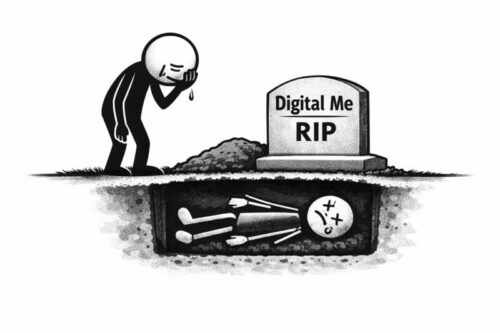
Pirate Parties International has increasingly advocated for digital rights in international forums. Our UNHQ representatives presented the importance of digital rights during their 2018 speech at the United Nations Economic and Social Council, and we also published the following statement that year for the Report of the High Commissioner for Human Rights.
We emphasize that digital rights are human rights, and global treaties must sanctify those rights and police nation states that both restrict access to digital services and violate privacy. Our digital footprints are more than merely data. They are a part of our person. When we die our digital footprint remains. We must protect our medical records, emails, photos, social profiles, games, and the host of digital records that reflect ourselves in this modern age where a person exists in a digital world that coexists alongside the physical one.
“…you´ll never need to delete another message”
Imagine logging into an old email only to find years of correspondence vanished, or a cherished game erased, or all of your emails, photographs, and files suddenly in danger of being erased if you do not download them from the cloud. Such is the case when service remove free cloud storage that they dangle to attract new users. Remember when Gmail told us that we would never have to erase an email again: “Don’t throw anything away. 1000 megabytes of free storage so you’ll never need to delete another message”.
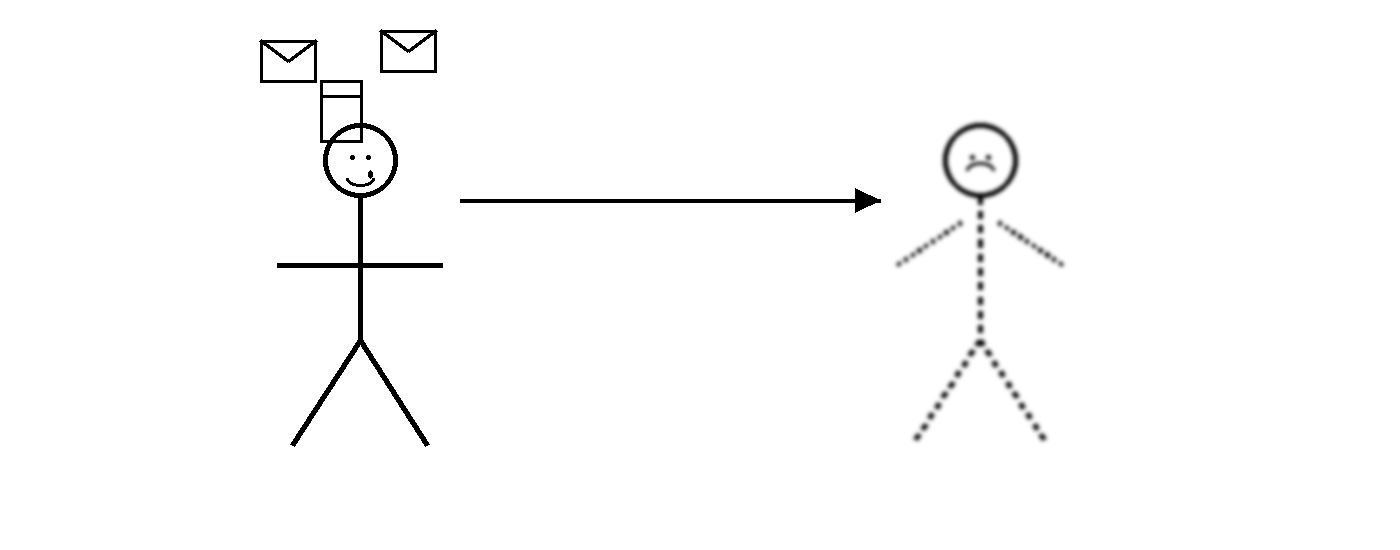
That amounts to only 1 gb, which they have since expanded to 15 gb for free, but it is still not enough for most people. Furthermore, utilizing free corporate services like Gmail means that you are selling your data to companies and government agencies. We must provide safe and free storage as a human right.
“Social media platforms must ensure that user accounts are preserved.”
Pirate parties have long championed digital rights, privacy, and user sovereignty. It’s time to protect our extracorporeal (beyond body) and posthumous (after death) online existence with a global Digital Legacies Treaty. The core argument of this accord is to protect personal archives. Even if a user is inactive or dead, we must sanctify their digital records. Individuals who are alive must be able to obtain access to their accounts and services. Likewise, next of kin, must have rights to access them. The right to digital services is similar to a child´s need for education but extending over a lifetime and beyond. This act would ensure perpetual access to services and transfer rights, as well as prevent companies from removing access to services that were provided for free (e.g. offering free storage and then changing policy to charge for it). Social media platforms must ensure that user accounts are preserved, unless the user or their next of kin has expressly provided demands to remove them. As social media grows over time, platforms will have distinct incentives to remove the information of users that do not benefit their corporate or political goals. We must ensure that users and user data are not erased in an effort to control the present and our memories of the past.
“Email services and social media platforms must be treated as effective utilities”
To directly tackle corporate arguments that it’s costly to maintain access and preserve user data, a shift in governance regulations is required. Email services and social media platforms must be treated as effective utilities, similar to healthcare and other emergency services. This means that the financial costs required for the services to maintain access to user data would become a government expense, an essential service akin to a military defense budget. In the growing age of AI disinformation, access to an individual´s authentic information is vital towards our survival as a civilization. With this, investments must be made to ensure that only public information remains and an individual´s privacy is respected.
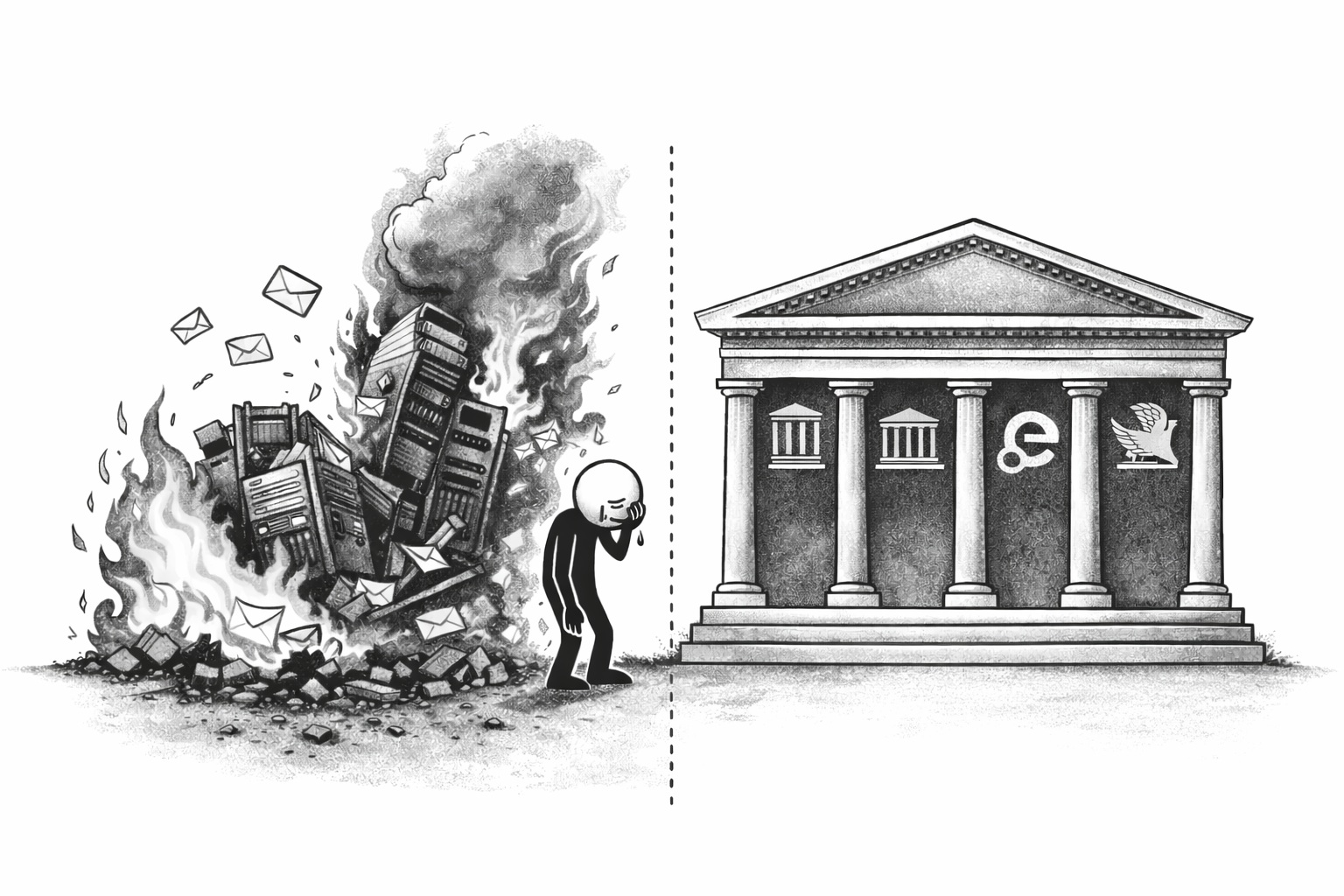
When platforms shutter, data often evaporates. Projects, such as the Internet Archive´s Wayback Machine, UNESCO´s Memory of the World, and the EU´s Europeana archive play a crucial role in preserving our shared digital heritage. Prior global initiatives, such as UNESCO´s Charter on the Preservation of Digital Heritage, are non-binding or lack enforcement mechanisms, resulting in limited scope and uneven implementation. As a result, a large chunk of our collective personal memories are cremated, often while we are still alive. The Digital Legacies Treaty aims to address this with structured procedures. First, it will mandate bailout, takeover, or merger options to keep services alive, prioritizing user data continuity over profit. If that’s impossible, it would require donation of archival data to trusted GLAM institutions (galleries, libraries, archives, and museums). Aside from the ongoing global projects listed above, viable national recipients include the National Diet Library of Japan, the Bibliothèque nationale of France, and the National Archives of the USA. Collaboration between national and global parties will ensure humanity does not experience a digital dark age.
“ National Legacy governance acts will likely precede any successful supranational treaty.”
Finally, we cannot trust that a global Digital Legacies Treaty will be effectively implemented in our lifetimes. National Legacy governance acts will likely precede any successful supranational treaty, and even such reforms may never be sufficient. For the time being, we encourage the public to preserve your own records. Create manual backups on good storage. Remember that even the best hard drives have limited durability. Please consider creating memory disks and other long-term storage. While we often believe that we are living in the modern age, in fact we are at the dawn of the digital age. Our generation is among the first to be able to have digital records that can be preserved forever. We believe that our digital records are important. They are our collective memory preserved for the future. Ultimately, we are responsible for preserving our own memories. And to do so, we must make a global united stand to ensure that our online lives are protected in the same way as our physical ones. We hope that more policymakers, tech leaders, and individuals will join us in this fight. Contact your representatives, share this vision, and demand a web that respects our legacies. Our digital souls depend on it.
————————————————————————————————–
The following message was prepared by members of the PPI Discord community. It does not necessarily reflect the views of all PPI members, but we hope it does. If any of our members have competing ideas about this issue or any other issue that they would like us to broadcast, please share them with us. We are happy to broadcast a variety of ideological opinions and diverse issues. Our goal is to create positive communication to solve problems.